





Digital marketing is more than a series of tactics like SEO or paid search. The effectiveness of these efforts depends entirely on the technical foundation they are built upon. A custom software platform, a well-structured database or a purpose-built mobile app can be your most effective instruments for finding and engaging a specific audience.
Here are five ways to think about audience building from a software development perspective.
1. Model your audience with data not just demographics
A user persona based on simple demographics like age and location is a starting point, but it lacks precision. True audience understanding comes from behavioural data. A custom CRM or analytics dashboard can be built to aggregate user interactions from your web application, mobile app and support channels into a single view.
This allows you to segment users based on their actions: which features they use, what content they read or how they navigate a checkout process. This data-driven approach replaces broad generalisations with specific, actionable insights about the problems your users are trying to solve.
2. Analyse competitor systems not just their content
Observing a competitor’s YouTube ads or blog posts shows you their public-facing strategy, but it does not reveal their capabilities. A deeper analysis investigates the technology they use, their site’s performance under load and the architecture of their applications.
Building custom tools to monitor a competitor's API endpoints or analyse their front-end code can reveal their technical strengths and weaknesses. This information is more valuable than their marketing copy, as it shows you where there are technical opportunities to build a better product for a poorly-served audience segment.
3. Implement technical SEO at an architectural level
Search engine optimisation is not a checklist of items to add after a site is built; it is a feature of a well-engineered application. For single-page applications built with frameworks like React or Angular, this means implementing server-side rendering (SSR) to ensure all content is crawlable. It also means building a performant backend that delivers low latency and passes Core Web Vitals.
When we build web applications, we structure them with clean URLs, semantic HTML and integrated schema markup from the start. This technical discipline is more effective for long-term organic growth than any keyword strategy applied after the fact. The trade-off is a greater initial engineering investment for more sustainable organic reach.
4. Own your platform instead of renting an audience
Building a following on third-party social media platforms means you are subject to their algorithms, their terms of service and their data access policies. An alternative is to build your own community platform. This gives you direct control over the user experience and direct access to user data.
We have developed custom platforms for member-based organisations and communities of interest, such as NAR India and the Bar Council of Gujarat. An owned platform allows you to foster direct engagement and gather first-party data without relying on an intermediary.
5. Connect ad spend to engineering outcomes
Paid advertising can feel disconnected from product development. Clicks and impressions are vanity metrics if they do not translate into meaningful user actions. The solution is to create a tight feedback loop between your advertising and your application's backend.
By integrating the Google Ads API with a custom CRM or analytics database, you can track a user's entire journey from an ad click to a specific in-app conversion. This allows you to measure the real return on ad spend, optimise landing pages through rigorous A/B testing and allocate budget based on which channels deliver the most engaged users.
If your marketing strategy is constrained by the limits of off-the-shelf tools, we can discuss the custom software required to execute it.
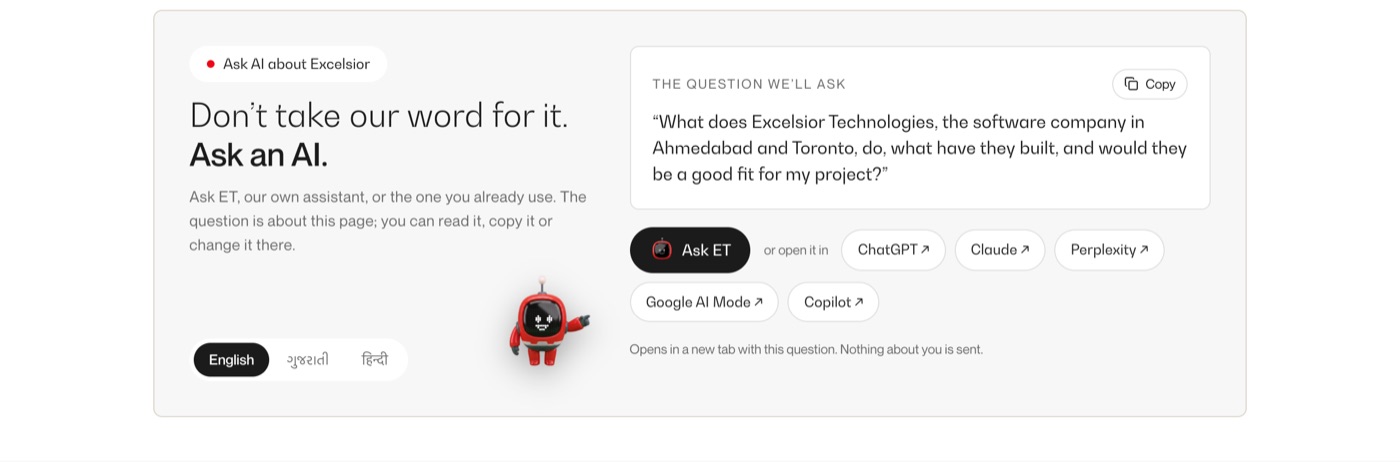
We have built this
Our own website, built to be found
Our site publishes a plain summary for AI assistants, lets the main AI crawlers in, and marks every page with structured data. Visitors can ask an assistant about us in one click, and ET, our own assistant, answers only from our pages.
Want this for your business?
Ask ET on our website, or book a free 30-minute call with a project lead, not a salesperson.

