Insights, Updates & Ideas That Drive Growth
Stay ahead with expert insights, industry trends, and practical resources from Excelsior Technologies. Explore articles on PHP development, web technologies, digital transformation, and best practices that help businesses build scalable, secure, and high-performing digital solutions.




Make your app a habit: gamification with Flutter Flame
Streaks, levels, rewards and a two-minute mini-game can turn an app people open once into one they open daily. How Flame adds game moments to a normal Flutter app, without building a full game.

Make your app a habit: gamification with Flutter Flame
Streaks, levels, rewards and a two-minute mini-game can turn an app people open once into one they open daily. How Flame adds game moments to a normal Flutter app, without building a full game.

Off-the-shelf CRM or your own? When building pays, and when it does not
Ready-made CRMs are quick to start and fit most sales teams. Some businesses spend years bending one around how they actually work. How to tell which one you are.

What an AI assistant for your website really costs, and what drives the price
A website assistant can be a weekend plugin or a serious sales tool. What actually drives the price, the running costs nobody mentions, and the ranges from our own published cost guide.

Digital twins without a factory-sized budget: where to start
A digital twin is a live model of something real (a building, a fleet, a production line, a city street) that warns you before trouble arrives. You do not need a smart factory to begin. You need the data you already have.
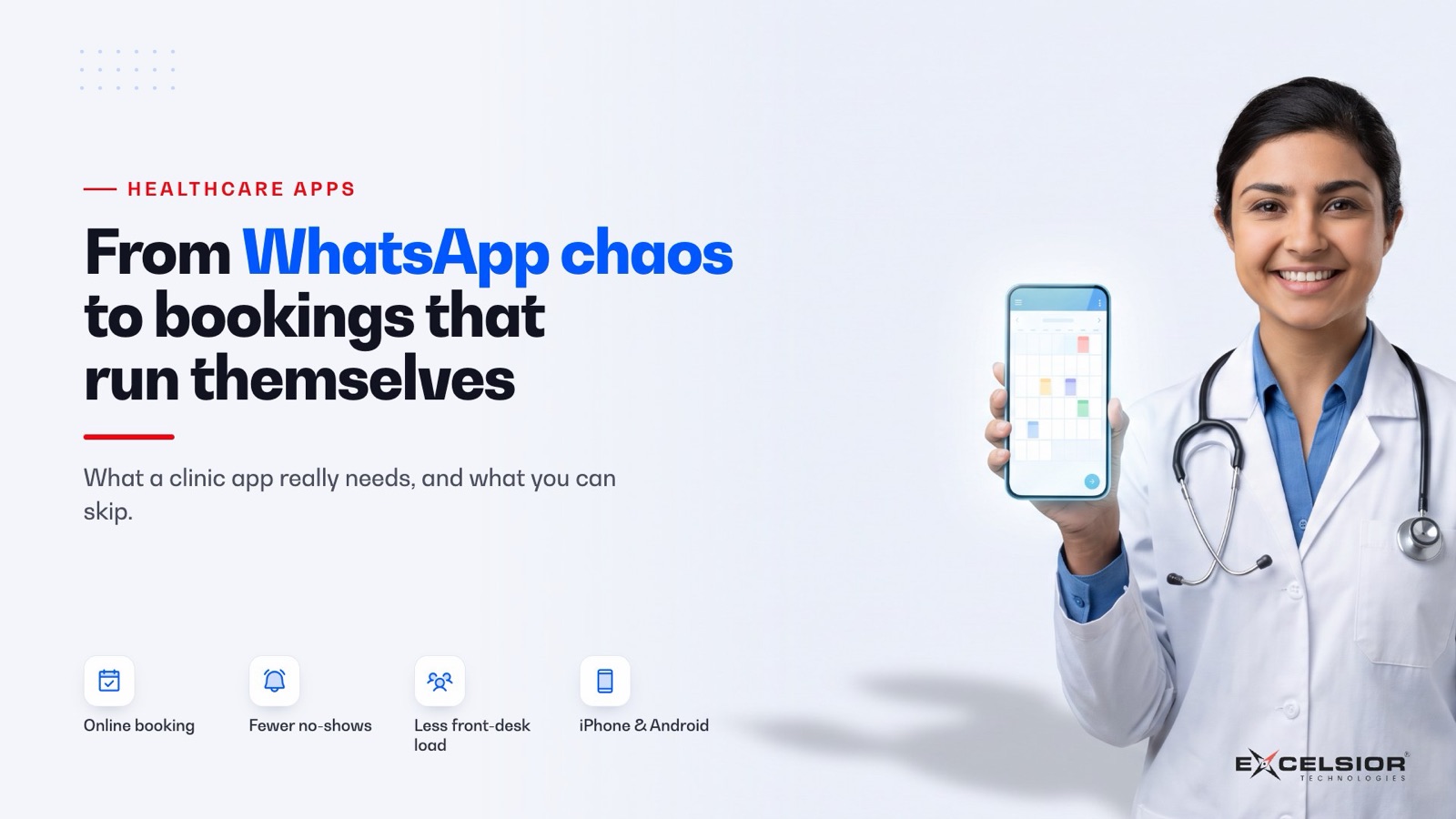
From WhatsApp chaos to bookings that run themselves: what a clinic app needs
Calls, WhatsApp messages and a paper diary work until they don’t. The features that actually reduce no-shows and front-desk load, the ones you can skip, and how to keep patient data safe.

Five questions to ask any AI vendor before you sign
Data, cost, ownership, exit and support. The five questions that separate a partner who will build something useful from one who will build a demo, and what good answers sound like.

Your software project stalled? How to take it back, step by step
The vendor stopped replying, the deadline slipped twice, and nobody can say what is finished. A calm, practical way to get your code, your accounts and your project back on track.
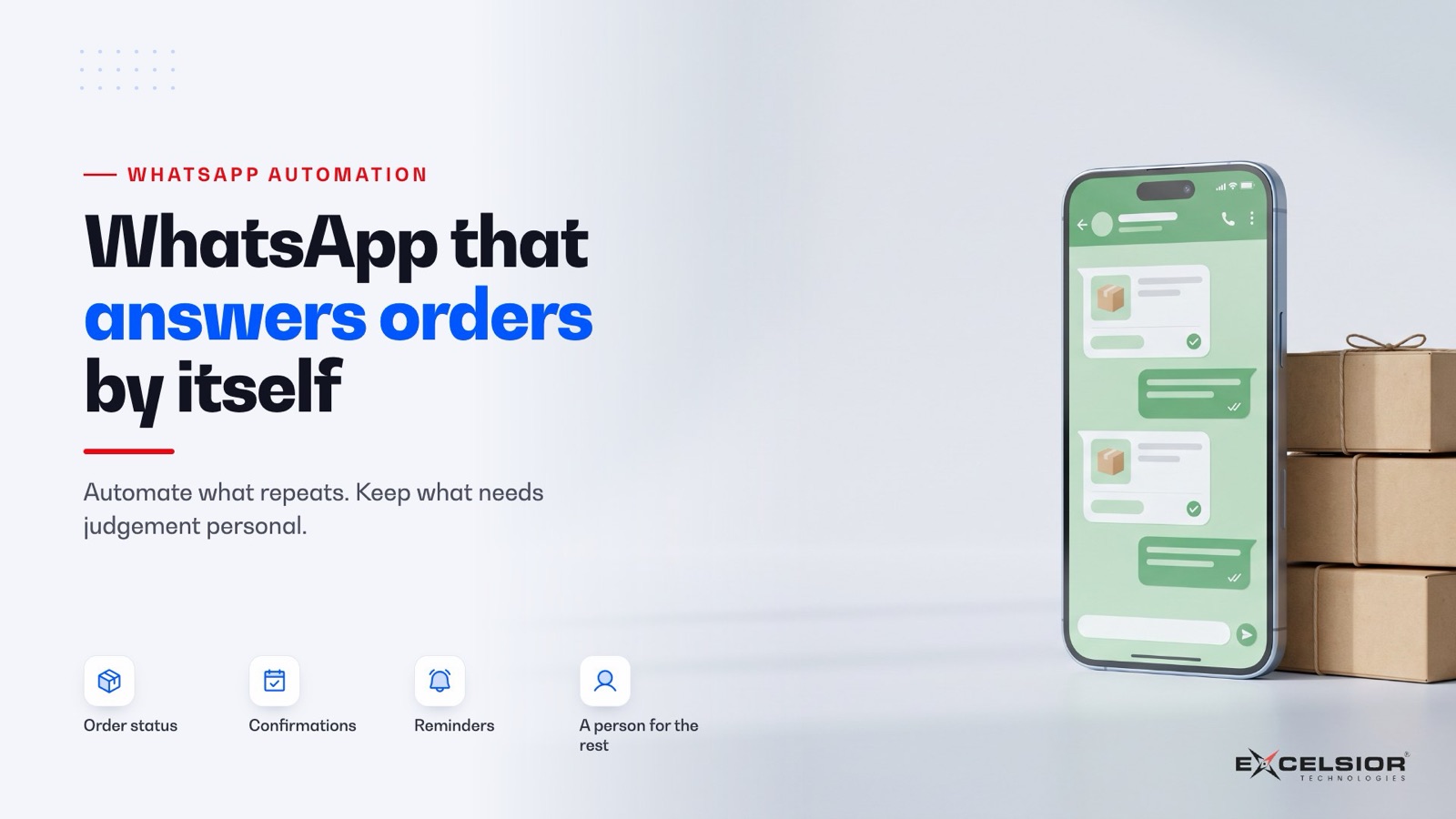
WhatsApp for orders and support: what to automate first, and what to keep personal
Your customers already message you on WhatsApp. A practical guide to the WhatsApp Business Platform: the replies worth automating, the ones a person should send, and how it connects to your orders and CRM.

One codebase, two app stores: how Flutter cuts your app budget in 2026
Separate iPhone and Android apps mean two teams, two release cycles and two bills. Why many product teams now build once in Flutter, what it really saves, and when native still wins.
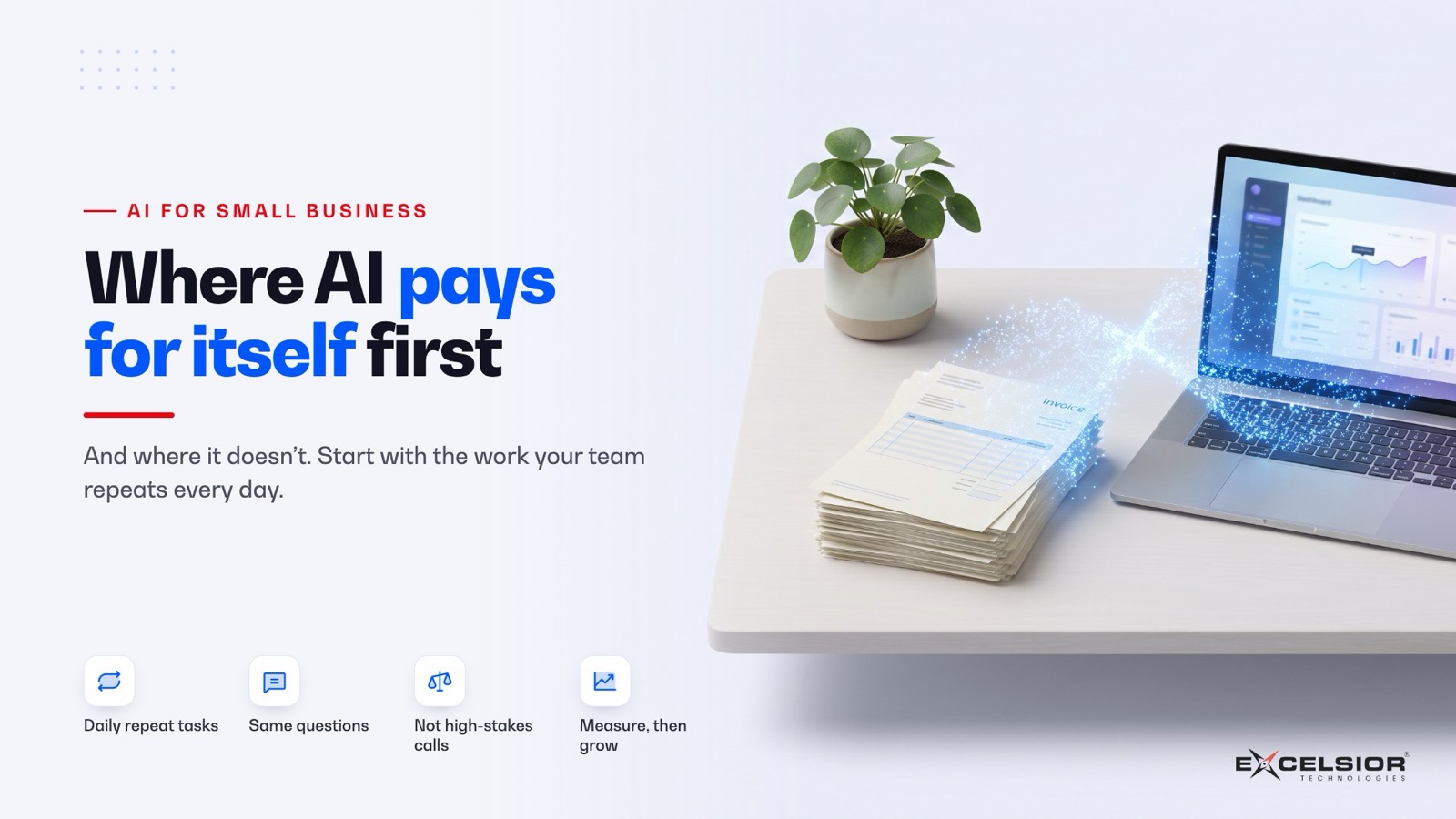
Where AI pays for itself first in a small business, and where it doesn’t
Not every task is worth handing to AI. A plain test for picking the first one: frequent, rule-based, text-heavy and checkable. Plus the tasks to leave alone for now.

Your customers now ask AI about you. Make sure it gives the right answer.
Before they call, many buyers ask ChatGPT, Gemini or Perplexity who to hire. Here is how those assistants decide what to say about your business, and the changes that make the answer accurate.

Custom AI Systems: When Off-the-Shelf Models Fall Short
A practical guide for engineering leaders evaluating when to build custom domain-specific AI models versus relying on general foundation APIs.

AI features that work offline and keep data on the phone
No signal, and the app still reads the receipt. On-device AI runs the model on the phone itself: instant, private, and with no bill for every request. Where it fits, and where the cloud still wins.
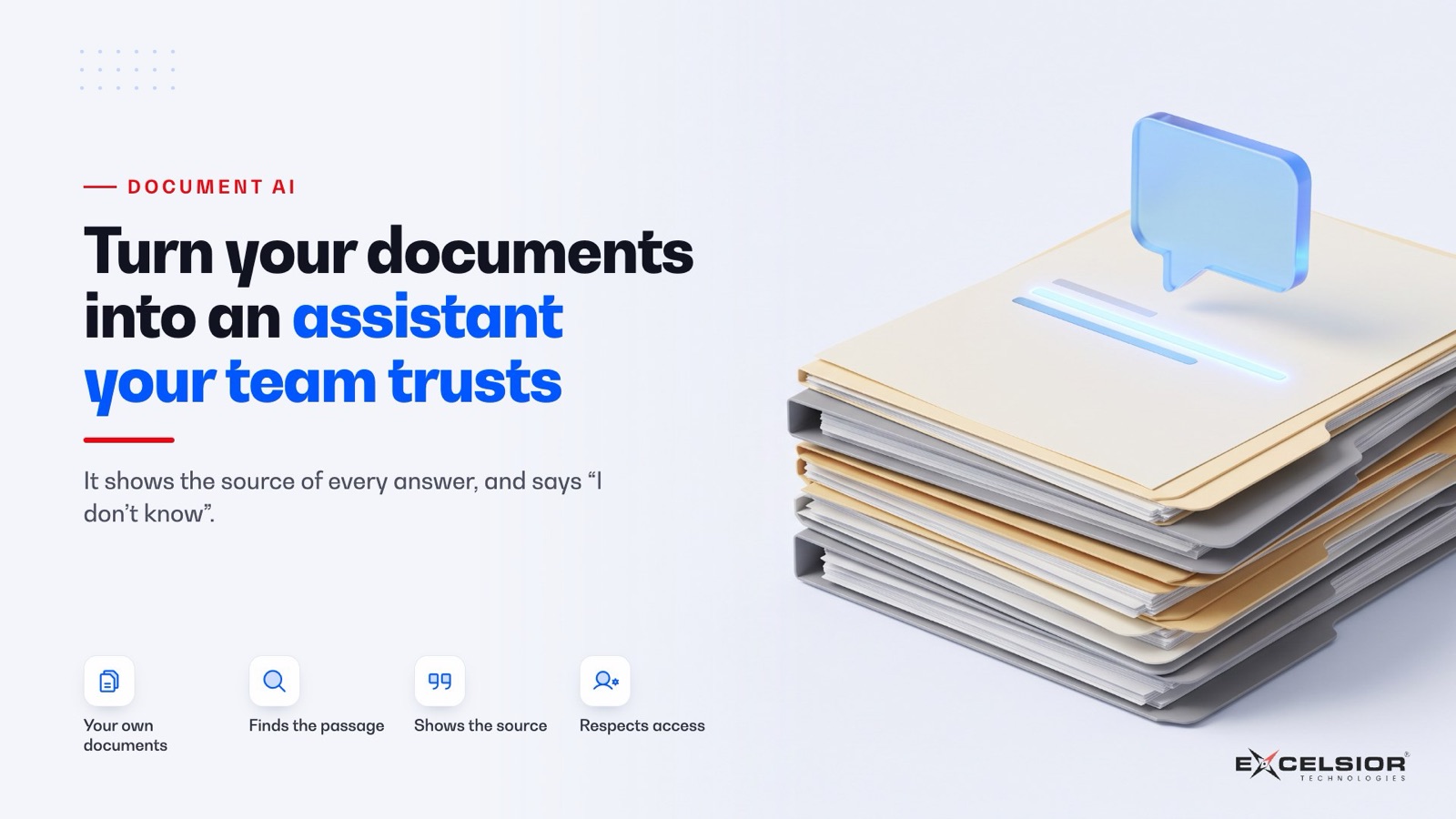
Turn your company documents into an assistant your team trusts
Policies, manuals, price lists, past proposals: the answers are in your documents, but nobody can find them fast. An assistant that answers from them, shows the source, and says “I don’t know” when it should.

What an AI agent would do in your operations team on day one
Forget the hype. Here is one ordinary morning in an operations team, with one AI agent doing the routine work and a person approving anything that matters. Step by step.
What changes when your developers work with AI every day
AI coding assistants are now part of how good teams build software. What genuinely gets faster, what still needs a senior engineer, and the questions to ask before you hire a team that “uses AI”.

Let your AI read your CRM without handing over the keys
MCP, the Model Context Protocol, is how an AI assistant gets answers from your own systems: CRM, orders, documents. Explained for owners, with the permissions that keep you in control.

Adding AI without risking customer data: an owner’s checklist
AI on your customer data can save hours, or leak it. Ten checks an owner can run before any AI project goes live, in plain language, from where the data goes to who approves risky actions.

Voice AI on your phone line, website and app: what customers accept today
A voice assistant can answer every call, book appointments and route the rest. It can also frustrate people fast. Where voice AI helps callers, where it annoys them, and how to design it so they do not hang up.
Rebuild your old app or add AI to it? A decision guide for owners
An ageing app and a pile of AI ideas. Rebuilding feels clean but is slow and risky; adding AI to what you have is faster but not always possible. Five questions that settle it.

Google's 'G' logo redesign: a technical retrospective
Years after Google updated its logo, we analyse the project as a case study in brand engineering. This retrospective looks at the technical execution, from vector graphics to the challenges of a global deployment.

How Microsoft Research is teaching AI to debug code
Microsoft Research is training AI models to assist with debugging, moving beyond syntax checks to offer contextual fix suggestions. We examine the practical impact on development workflows and where human expertise is still essential.

Key features of Google Gemini for custom applications
Google Gemini offers new capabilities for reasoning, multimodality and summarisation. We examine its features from an engineering perspective, considering their use in custom software and AI systems.

Nintendo hardware developers on designing the Switch 2
Insights from Nintendo's hardware team reveal the design philosophy behind the Switch 2. Key decisions about backward compatibility, custom silicon and developer tooling show how hardware choices create a unique platform for software.

Discord's Social SDK: A Retrospective for Game Developers
Discord's Social SDK promised to embed community features directly into games. Years on, we look at what the SDK delivers in practice and where our game development team can help you integrate it.

Google’s Gemini 2.5 Pro: an AI coding model now free to use
Google has made its Gemini 2.5 Pro model available at no cost for developers. We examine its technical capabilities for coding, including its large context window and multimodal inputs, for professional software teams.

AI can build a website in 90 seconds. What's the catch?
AI website generators can produce a simple site from a text prompt in minutes. But for custom business logic, scalability and security, you reach their limits quickly.

Analysing OpenAI's claymation image generation model
A technical look at how OpenAI's latest model generates claymation-style images. We explore the underlying mechanisms, control parameters and the trade-offs involved in developing specialised generative AI.

Meta Mocha: The engineering of AI talking characters
AI talking characters require complex systems for voice synthesis, facial animation and interaction. We explore the architecture of a system like Meta Mocha and the engineering trade-offs involved in building one.

Apple’s AI isn’t the letdown. The AI hype is.
Apple’s cautious AI strategy reflects a hard truth: the industry has overpromised. We explore why most AI isn't production-ready and how we build systems that are, focusing on reliability and privacy over spectacle.

Musk's sale of X to xAI: a technical breakdown
Elon Musk's hypothetical sale of X to his AI firm, xAI, is more than a business move; it is a massive systems integration challenge. We explore the technical trade-offs in merging a global social platform with advanced AI, from content moderation to data processing.

OpenAI's AI image generator: a retrospective
Generative AI for images has moved from a novelty to a production tool. We revisit our original analysis to discuss the real engineering challenges of integration, customisation and scaling.

Skype's replacement: a technical post-mortem
Microsoft is replacing Skype with Teams. This shift offers a clear lesson in platform architecture, moving from peer-to-peer to a centralised cloud model, and has major implications for building your own communication tools.

What’s new in Laravel 12: features and updates
A technical look at the new features in Laravel 12. We analyse the refreshed starter kits, performance changes like asynchronous caching and the shift to UUID v7, and what they mean for your next project or upgrade.

A guide to the Internet of Behaviors (IoB)
The Internet of Behaviors connects disparate data to model human action. We explain the data pipelines, ML models and integration challenges involved in building these complex systems.

The metaverse explained: a software development guide
The metaverse is not a single product but a complex integration of existing technologies. This guide explains the software components required, from rendering engines to blockchain backends, and the development trade-offs you will face.

The 2025 web database list: A retrospective
This article was first written as a forecast for 2025. We review the original list to see what holds up, what has changed, and the critical trade-offs you face when choosing a database for your web application today.

Mobile App Types: Native, Hybrid and Web Apps
Deciding between a native, hybrid or web app involves trade-offs in performance, cost and features. Understand the key differences to choose the right approach for your project's specific requirements.

ChatGPT vs DeepSeek AI: a technical comparison
When choosing an LLM, ChatGPT and DeepSeek offer different architectural trade-offs. We analyse their technical differences in performance, cost and customisation to inform your decision.

A guide to upgrading to Ubuntu 24.10 Oracular Oriole
This is a technical guide to performing an in-place upgrade to Ubuntu 24.10 from 24.04. We detail the command-line process, common failure points and post-upgrade verification steps for developers and system administrators.

Revisiting Android 15: AI and accessibility features
When Android 15 was announced, the focus was on new AI and accessibility tools. This article looks back at what those platform updates meant in practice for developers building and maintaining custom Android applications.

Apple Intelligence vs Microsoft Copilot: A strategic analysis
Apple and Microsoft offer two distinct blueprints for AI architecture. We analyse the trade-offs between on-device privacy and cloud-based generation to help you define your own enterprise AI strategy.

IBM’s environmental intelligence platform and its data APIs
IBM's Environmental Intelligence platform provides processed environmental data through a suite of APIs. We help you integrate this data to build custom applications for sustainability, compliance and operational planning.

Qualcomm’s AI-first vision for smart devices
Qualcomm's new Snapdragon chips move AI processing from the cloud to the device. We explore the technical implications for developers building for PC, mobile and automotive.

Key development trends: a technical analysis
A look at current software development trends for technical leaders. We analyse the practical implications and architectural trade-offs of edge computing, MAUI, GraphQL and more.

A look back at 2024's technology trends
This article was first published with predictions for 2024. We revisit those points, correct what was wrong and analyse the trends that continue to shape software development today.

A technical guide to the iPhone 16 Pro
A technical analysis of the iPhone 16 Pro's hardware and software. We examine the A18 processor, display, and camera system from a development perspective, including potential trade-offs.

A developer's retrospective on Android 14's features
We first wrote about Android 14 at its launch. This is a technical look back at its key features, their trade-offs and their lasting impact on Android app development.

Exploring Angular’s App Initializer: Use Cases, Mechanics and Limitations
A guide to Angular's APP_INITIALIZER token for running tasks before an app starts. We cover its mechanics, common use cases like config loading, and the performance costs of delaying the bootstrap process.

Optimizing Angular for speed: essential techniques
Angular performance isn't automatic. We explain key techniques for building faster applications, from change detection strategies to server-side rendering, and the trade-offs each one involves.

Java in cloud computing: SaaS, PaaS and modern architectures
Java's traditional strengths in the JVM are for long-running applications, creating a trade-off in cloud-native patterns. We examine how frameworks and new runtimes like GraalVM address the challenges of microservices and serverless computing.

Designing dark mode: best practices for user interfaces
Implementing dark mode is more than inverting colours; it's a technical design challenge. Get it right, and you build a more accessible and comfortable interface; get it wrong, and you compromise readability and usability.

7 IDEs for software application development projects
A technical comparison of seven common IDEs for software development. We analyse the strengths, weaknesses and trade-offs of each tool for specific technology stacks like .NET, PHP, React and native mobile.

Location-based services in mobile apps
Integrating location services means choosing between accuracy, battery use and user privacy. We explain the technical trade-offs of GPS, beacons and Wi-Fi for your mobile app.

Micro frontends and scalable web app architecture
Micro frontends break monolithic UIs into independent, deployable pieces, much like microservices do for backends. This guide covers the benefits for large-scale applications and the critical trade-offs you must weigh before adopting the architecture.

Logo design evolution: Classic roots to modern innovations
A logo once lived only on paper. Today it must adapt from a 16px favicon to a 4K display. This article covers the technical drivers behind logo evolution and how we design for performance and adaptability across print, web and mobile.

Social media graphics: technical principles for engagement
Stop treating social media graphics as art projects. Start building them like software components with design systems, technical specifications and accessibility compliance for scalable results.

A Technical Review of 5 Common Graphic Design Tools
Choosing design software involves technical trade-offs. This review examines five common tools, focusing on their core functions, ideal use cases in software development and the specific limitations you should consider.

Understanding software maintenance: types, phases and models
Software maintenance is not just fixing bugs; it is the planned process of ensuring your application remains effective. We explain the types, models and trade-offs involved in maintaining custom software, mobile apps and AI systems.

Design systems: creating uniformity across your digital platforms
A design system provides reusable components and standards to build applications consistently. We explain what they are, what they cost and how to build one that your team will actually use.

How to reduce software development costs without losing quality
Balancing your budget against quality is a series of trade-offs, not a hunt for silver bullets. We outline six practical techniques for managing development costs and explain the costs and benefits of each.

Mastering Software Documentation: A Complete Guide for Developers
Good documentation is not a chore but a critical tool for building better software. This guide provides practical strategies for writing and maintaining documentation that your development team will actually use.

Swift vs Objective-C: Choosing an iOS language
A decade ago, the choice between Swift and Objective-C was a key decision. Today, the landscape has shifted. We revisit the comparison for teams managing modern and legacy iOS codebases.

Effective Strategies for Error Handling in Node.js
Move beyond generic advice. This guide provides code-centric strategies for handling errors in Node.js, covering centralised middleware, custom error classes and graceful shutdowns for reliable applications.

A Guide to Developing Modular Plugins in Angular
Build more maintainable Angular applications by isolating features into modular plugins. This guide details the architectural patterns and trade-offs for creating reusable code.

Key factors to evaluate when choosing a website designer
Choosing a web design partner involves more than reviewing a portfolio. We explain how to assess technical depth, process maturity and communication protocols to find a team that can deliver.

Revisiting RSS feeds and their role in SEO
RSS feeds are no longer a direct SEO driver, but they remain a useful tool for content syndication and audience engagement. Here’s what has changed and what still works for a technical audience.

How to use RSS feeds for your website's SEO
RSS feeds were once a key SEO tactic but their direct impact has faded. We look at what has changed and where feeds still offer value for content automation and syndication.

Performance and Security for Modern Applications
Beyond the basics of performance and security, we examine the trade-offs involved in key architectural decisions. This guide offers specific techniques for building applications that are both responsive and resilient.

PHP for Enterprise Applications: A Technical Assessment
PHP is often dismissed, but its modern ecosystem offers practical advantages for enterprise applications. We assess its real-world performance, maintenance costs and security model for technical leaders.

Determining the optimal timing for implementing Laravel microservices
Microservices are a solution to a specific set of scaling problems, not a default architecture. This article details the triggers for moving a Laravel application from a monolith and the operational costs you must be prepared to pay.

Why use Angular for enterprise web applications
Angular offers a structured, opinionated framework for building large-scale applications. We explore how its features support long-term maintenance and team consistency, and where its trade-offs might make other tools a better fit.

The technical impact of SEO on business growth
SEO is an engineering discipline. We discuss how technical choices in your web application, from JavaScript frameworks to server configuration, directly impact search performance and growth.

JavaScript practices for building web applications
A list of 'best practices' is a starting point, not a destination. We discuss the real-world trade-offs we make when choosing code structure, performance optimisations and security measures in the JavaScript applications we build.

Essential practices for successful iOS development
We revisit foundational iOS development advice, updating it for a world with SwiftUI and Swift Concurrency. Learn the modern trade-offs between new frameworks and established patterns for building maintainable apps.

UX research for user-centred product design
UX research is a structured process for reducing project risk by grounding design decisions in evidence. We explain the methods we use in our UI/UX design service and the practical trade-offs involved.

Mastering project management: 10 keys to software success
Generic project management advice often fails in software development. We reframe the 10 core principles for the specific challenges of building apps, from managing technical scope to integrating a remote development team.

Why Microsoft sees .NET as essential for businesses
Microsoft's move to a cross-platform, open-source .NET was a strategic shift. We explain the specific technical trade-offs and how its architecture addresses challenges like performance, containerisation and long-term maintenance.

Choosing an IT development partner: a practical guide
Choosing a development partner involves more than reviewing portfolios. This guide offers a structured approach for technical leaders to vet agencies, from code quality checks to assessing project management realities.

React Native vs Flutter: A Guide to Making the Right Choice
A technical comparison of React Native and Flutter. We explain the trade-offs in performance, UI and team skills to help you choose the correct framework for your mobile app.

Revolutionizing the digital era: the impact of mobile apps on creativity
Mobile apps provide a constrained but powerful environment for creative work. We explore the engineering decisions behind building them, from UI design for touch interfaces to the trade-offs between native and cross-platform development.

Using Gemini for software test automation
A guide to using Google's Gemini model for test automation. We explain how it can generate test cases, data and documentation and discuss the practical trade-offs of using an LLM in a QA workflow.

Boosting development productivity with Gemini: your code companion
Gemini offers AI-powered code assistance. We integrate it into our development process to improve code consistency and accelerate project delivery for our clients' custom software, web and mobile applications.

A complete guide to building MVPs with Excelsior
An MVP validates your product idea with real users before you over-invest. This guide details our process for defining features, choosing technology and managing the trade-offs of speed versus scale.

From Idea to Impact: A Guide to Building Your MVP and Scaling Beyond
This guide moves beyond theory to detail our process for MVP development. We explain the technical decisions, trade-offs and execution steps from initial specification to a scalable, market-ready product.

Boost team productivity with a scheduler app
A scheduler app can reduce operational friction, but only if built correctly. We explore the technical decisions behind effective scheduling software, from real-time conflict resolution to scalable notification systems.

The Power of UX: Crafting High-Converting Websites
A website that looks good but doesn't convert has a friction problem. We explain the UX trade-offs required to build interfaces that guide users to act, not just admire the design.

AI for transparent governance: a technical guide
AI can improve public sector transparency and efficiency. This guide details specific applications, from anomaly detection in financial data to NLP for public feedback, and outlines the technical challenges involved.

The journey of UX design in web development
UX is more than aesthetics; it's a set of engineering problems. This article traces the evolution of UX from static HTML to modern SPAs, focusing on the technical trade-offs and implementation challenges.

Selecting a JavaScript Framework: A Guide to the Trade-offs
Choosing a JavaScript framework is about more than a feature checklist. It's about understanding the trade-offs between options like Angular and React and how they align with your project's long-term goals.

Transforming education with advanced technology
We build educational software by focusing on the underlying architecture. This article details our technical approach to gamification, adaptive learning, AR/VR and analytics, including the trade-offs involved in each.

Faster Custom Development: A Guide to LCNC Trade-offs
Low-code and no-code platforms promise speed but come with constraints. We explain the technical trade-offs to help you decide when LCNC is the right tool and when custom code is non-negotiable.

A developer's review of iOS 16 features
A look back at the iOS 16 features that mattered for app development. We review the engineering trade-offs of Live Activities, Focus Filters and Vision framework updates.

Why use Node.js for your web application?
Node.js excels at I/O-heavy tasks through its event-driven, non-blocking architecture. Learn its technical advantages for building scalable APIs, real-time systems and full-stack JavaScript applications.

How to choose the right software development firm
Selecting a software partner is a critical technical decision. This guide offers a framework for evaluating firms based on verifiable expertise, not marketing claims.

Why WordPress development is still popular
This article was first written when WordPress was primarily a blogging tool. We re-examine its arguments to see what holds up and how WordPress has evolved into a framework for complex web applications.

Technical alternatives to the React framework
React is a common choice for front-end development, but it is not the only one. We compare key alternatives like Vue, Preact and Ember, detailing the technical trade-offs to help you choose the right tool for your project.

Generate leads with Facebook Messenger
A technical guide to integrating Facebook Messenger with your business systems. We discuss the APIs, architectural choices and trade-offs of using it for lead generation and customer support.

5 Key Features of the M2 MacBook Air: A Retrospective
Originally published in 2022, this article revisits the M2 MacBook Air. We analyse its core features from a developer's perspective and evaluate its relevance against newer models.

macOS Ventura features: a retrospective for developers
In 2022, Apple launched macOS Ventura. We revisit its headline features like Stage Manager and Continuity Camera to assess their lasting impact on development workflows and application UX.

A look back: 7 key features from Angular 14
Angular 14 introduced foundational changes like standalone components and typed forms. We look back at these features and explain their lasting impact on how we build modern, maintainable Angular applications today.

A practical guide to outsourcing Laravel development
Outsourcing Laravel development requires balancing project scope, budget and access to skills. This guide covers the trade-offs and provides a framework for selecting the right technical partner.

Five steps to create a high-level marketing plan
A marketing plan is a system specification for your go-to-market engine. It defines the data you need to capture and the technical infrastructure required to act on it.

5 tips that will help you reach your target audience
Move beyond generic marketing tactics. See how custom software, data analytics and well-engineered platforms can give you more precise control over how you find and engage your audience.

How to find keywords with Google Autocomplete
Google Autocomplete is more than a convenience feature. It provides a direct view of real user queries that you can use to inform your content strategy and technical SEO.

5 ways to drive more traffic to your e-commerce store
Paid advertising is one route to traffic but it is not the only one. We explain five technical strategies for driving organic traffic through development, UI/UX and on-page SEO.

Create an effective marketing strategy with a SWOT analysis
A SWOT analysis is a framework for evaluating your marketing's Strengths, Weaknesses, Opportunities and Threats. Use this structured approach to move beyond reactive metrics and build a marketing strategy grounded in data.

5 Steps to Boost E-commerce Conversion Rates
Practical strategies for increasing sales on your online store. We cover five technical adjustments, from AI-driven product recommendations to optimising your checkout flow for reduced friction and higher completion rates.

The benefits of using React Native for mobile app development
React Native allows you to build for iOS and Android from a single JavaScript codebase. We examine its core benefits, from code reuse to native module integration, and discuss the trade-offs you need to consider.

Eight fundamental UI design principles
Good UI design is built on a foundation of core principles. This guide explains eight of them with a focus on practical application, technical implications and potential trade-offs for developers.

A technical look at Laravel 9's features
A retrospective look at Laravel 9's key features from its 2022 release. We explain the technical benefits that are now standard in modern Laravel development and how they inform our work.

The Golden Rules of Content Marketing
Content marketing for a technology company is a systematic process for demonstrating technical capability. It builds authority by solving specific problems for a technical audience through case studies, tutorials and data-driven insights.

Revisiting five marketing trends from 2023
In 2023 we outlined five key marketing trends. We review those predictions and analyse the technical challenges and implementation strategies that have emerged for each.
Make your app a habit: gamification with Flutter Flame
Streaks, levels, rewards and a two-minute mini-game can turn an app people open once into one they open daily. How Flame adds game moments to a normal Flutter app, without building a full game.
Off-the-shelf CRM or your own? When building pays, and when it does not
Ready-made CRMs are quick to start and fit most sales teams. Some businesses spend years bending one around how they actually work. How to tell which one you are.
What an AI assistant for your website really costs, and what drives the price
A website assistant can be a weekend plugin or a serious sales tool. What actually drives the price, the running costs nobody mentions, and the ranges from our own published cost guide.
Digital twins without a factory-sized budget: where to start
A digital twin is a live model of something real (a building, a fleet, a production line, a city street) that warns you before trouble arrives. You do not need a smart factory to begin. You need the data you already have.
From WhatsApp chaos to bookings that run themselves: what a clinic app needs
Calls, WhatsApp messages and a paper diary work until they don’t. The features that actually reduce no-shows and front-desk load, the ones you can skip, and how to keep patient data safe.
Five questions to ask any AI vendor before you sign
Data, cost, ownership, exit and support. The five questions that separate a partner who will build something useful from one who will build a demo, and what good answers sound like.
Your software project stalled? How to take it back, step by step
The vendor stopped replying, the deadline slipped twice, and nobody can say what is finished. A calm, practical way to get your code, your accounts and your project back on track.
WhatsApp for orders and support: what to automate first, and what to keep personal
Your customers already message you on WhatsApp. A practical guide to the WhatsApp Business Platform: the replies worth automating, the ones a person should send, and how it connects to your orders and CRM.
One codebase, two app stores: how Flutter cuts your app budget in 2026
Separate iPhone and Android apps mean two teams, two release cycles and two bills. Why many product teams now build once in Flutter, what it really saves, and when native still wins.
Where AI pays for itself first in a small business, and where it doesn’t
Not every task is worth handing to AI. A plain test for picking the first one: frequent, rule-based, text-heavy and checkable. Plus the tasks to leave alone for now.
Your customers now ask AI about you. Make sure it gives the right answer.
Before they call, many buyers ask ChatGPT, Gemini or Perplexity who to hire. Here is how those assistants decide what to say about your business, and the changes that make the answer accurate.
Custom AI Systems: When Off-the-Shelf Models Fall Short
A practical guide for engineering leaders evaluating when to build custom domain-specific AI models versus relying on general foundation APIs.
AI features that work offline and keep data on the phone
No signal, and the app still reads the receipt. On-device AI runs the model on the phone itself: instant, private, and with no bill for every request. Where it fits, and where the cloud still wins.
Turn your company documents into an assistant your team trusts
Policies, manuals, price lists, past proposals: the answers are in your documents, but nobody can find them fast. An assistant that answers from them, shows the source, and says “I don’t know” when it should.
What an AI agent would do in your operations team on day one
Forget the hype. Here is one ordinary morning in an operations team, with one AI agent doing the routine work and a person approving anything that matters. Step by step.
What changes when your developers work with AI every day
AI coding assistants are now part of how good teams build software. What genuinely gets faster, what still needs a senior engineer, and the questions to ask before you hire a team that “uses AI”.
Let your AI read your CRM without handing over the keys
MCP, the Model Context Protocol, is how an AI assistant gets answers from your own systems: CRM, orders, documents. Explained for owners, with the permissions that keep you in control.
Adding AI without risking customer data: an owner’s checklist
AI on your customer data can save hours, or leak it. Ten checks an owner can run before any AI project goes live, in plain language, from where the data goes to who approves risky actions.
Voice AI on your phone line, website and app: what customers accept today
A voice assistant can answer every call, book appointments and route the rest. It can also frustrate people fast. Where voice AI helps callers, where it annoys them, and how to design it so they do not hang up.
Rebuild your old app or add AI to it? A decision guide for owners
An ageing app and a pile of AI ideas. Rebuilding feels clean but is slow and risky; adding AI to what you have is faster but not always possible. Five questions that settle it.
Google's 'G' logo redesign: a technical retrospective
Years after Google updated its logo, we analyse the project as a case study in brand engineering. This retrospective looks at the technical execution, from vector graphics to the challenges of a global deployment.
How Microsoft Research is teaching AI to debug code
Microsoft Research is training AI models to assist with debugging, moving beyond syntax checks to offer contextual fix suggestions. We examine the practical impact on development workflows and where human expertise is still essential.
Key features of Google Gemini for custom applications
Google Gemini offers new capabilities for reasoning, multimodality and summarisation. We examine its features from an engineering perspective, considering their use in custom software and AI systems.
Nintendo hardware developers on designing the Switch 2
Insights from Nintendo's hardware team reveal the design philosophy behind the Switch 2. Key decisions about backward compatibility, custom silicon and developer tooling show how hardware choices create a unique platform for software.
Discord's Social SDK: A Retrospective for Game Developers
Discord's Social SDK promised to embed community features directly into games. Years on, we look at what the SDK delivers in practice and where our game development team can help you integrate it.
Google’s Gemini 2.5 Pro: an AI coding model now free to use
Google has made its Gemini 2.5 Pro model available at no cost for developers. We examine its technical capabilities for coding, including its large context window and multimodal inputs, for professional software teams.
AI can build a website in 90 seconds. What's the catch?
AI website generators can produce a simple site from a text prompt in minutes. But for custom business logic, scalability and security, you reach their limits quickly.
Analysing OpenAI's claymation image generation model
A technical look at how OpenAI's latest model generates claymation-style images. We explore the underlying mechanisms, control parameters and the trade-offs involved in developing specialised generative AI.
Meta Mocha: The engineering of AI talking characters
AI talking characters require complex systems for voice synthesis, facial animation and interaction. We explore the architecture of a system like Meta Mocha and the engineering trade-offs involved in building one.
Apple’s AI isn’t the letdown. The AI hype is.
Apple’s cautious AI strategy reflects a hard truth: the industry has overpromised. We explore why most AI isn't production-ready and how we build systems that are, focusing on reliability and privacy over spectacle.
Musk's sale of X to xAI: a technical breakdown
Elon Musk's hypothetical sale of X to his AI firm, xAI, is more than a business move; it is a massive systems integration challenge. We explore the technical trade-offs in merging a global social platform with advanced AI, from content moderation to data processing.
OpenAI's AI image generator: a retrospective
Generative AI for images has moved from a novelty to a production tool. We revisit our original analysis to discuss the real engineering challenges of integration, customisation and scaling.
Skype's replacement: a technical post-mortem
Microsoft is replacing Skype with Teams. This shift offers a clear lesson in platform architecture, moving from peer-to-peer to a centralised cloud model, and has major implications for building your own communication tools.
What’s new in Laravel 12: features and updates
A technical look at the new features in Laravel 12. We analyse the refreshed starter kits, performance changes like asynchronous caching and the shift to UUID v7, and what they mean for your next project or upgrade.
A guide to the Internet of Behaviors (IoB)
The Internet of Behaviors connects disparate data to model human action. We explain the data pipelines, ML models and integration challenges involved in building these complex systems.
The metaverse explained: a software development guide
The metaverse is not a single product but a complex integration of existing technologies. This guide explains the software components required, from rendering engines to blockchain backends, and the development trade-offs you will face.
The 2025 web database list: A retrospective
This article was first written as a forecast for 2025. We review the original list to see what holds up, what has changed, and the critical trade-offs you face when choosing a database for your web application today.
Mobile App Types: Native, Hybrid and Web Apps
Deciding between a native, hybrid or web app involves trade-offs in performance, cost and features. Understand the key differences to choose the right approach for your project's specific requirements.
ChatGPT vs DeepSeek AI: a technical comparison
When choosing an LLM, ChatGPT and DeepSeek offer different architectural trade-offs. We analyse their technical differences in performance, cost and customisation to inform your decision.
A guide to upgrading to Ubuntu 24.10 Oracular Oriole
This is a technical guide to performing an in-place upgrade to Ubuntu 24.10 from 24.04. We detail the command-line process, common failure points and post-upgrade verification steps for developers and system administrators.
Revisiting Android 15: AI and accessibility features
When Android 15 was announced, the focus was on new AI and accessibility tools. This article looks back at what those platform updates meant in practice for developers building and maintaining custom Android applications.
Apple Intelligence vs Microsoft Copilot: A strategic analysis
Apple and Microsoft offer two distinct blueprints for AI architecture. We analyse the trade-offs between on-device privacy and cloud-based generation to help you define your own enterprise AI strategy.
IBM’s environmental intelligence platform and its data APIs
IBM's Environmental Intelligence platform provides processed environmental data through a suite of APIs. We help you integrate this data to build custom applications for sustainability, compliance and operational planning.
Qualcomm’s AI-first vision for smart devices
Qualcomm's new Snapdragon chips move AI processing from the cloud to the device. We explore the technical implications for developers building for PC, mobile and automotive.
Key development trends: a technical analysis
A look at current software development trends for technical leaders. We analyse the practical implications and architectural trade-offs of edge computing, MAUI, GraphQL and more.
A look back at 2024's technology trends
This article was first published with predictions for 2024. We revisit those points, correct what was wrong and analyse the trends that continue to shape software development today.
A technical guide to the iPhone 16 Pro
A technical analysis of the iPhone 16 Pro's hardware and software. We examine the A18 processor, display, and camera system from a development perspective, including potential trade-offs.
A developer's retrospective on Android 14's features
We first wrote about Android 14 at its launch. This is a technical look back at its key features, their trade-offs and their lasting impact on Android app development.
Exploring Angular’s App Initializer: Use Cases, Mechanics and Limitations
A guide to Angular's APP_INITIALIZER token for running tasks before an app starts. We cover its mechanics, common use cases like config loading, and the performance costs of delaying the bootstrap process.
Optimizing Angular for speed: essential techniques
Angular performance isn't automatic. We explain key techniques for building faster applications, from change detection strategies to server-side rendering, and the trade-offs each one involves.
Java in cloud computing: SaaS, PaaS and modern architectures
Java's traditional strengths in the JVM are for long-running applications, creating a trade-off in cloud-native patterns. We examine how frameworks and new runtimes like GraalVM address the challenges of microservices and serverless computing.
Designing dark mode: best practices for user interfaces
Implementing dark mode is more than inverting colours; it's a technical design challenge. Get it right, and you build a more accessible and comfortable interface; get it wrong, and you compromise readability and usability.
7 IDEs for software application development projects
A technical comparison of seven common IDEs for software development. We analyse the strengths, weaknesses and trade-offs of each tool for specific technology stacks like .NET, PHP, React and native mobile.
Location-based services in mobile apps
Integrating location services means choosing between accuracy, battery use and user privacy. We explain the technical trade-offs of GPS, beacons and Wi-Fi for your mobile app.
Micro frontends and scalable web app architecture
Micro frontends break monolithic UIs into independent, deployable pieces, much like microservices do for backends. This guide covers the benefits for large-scale applications and the critical trade-offs you must weigh before adopting the architecture.
Logo design evolution: Classic roots to modern innovations
A logo once lived only on paper. Today it must adapt from a 16px favicon to a 4K display. This article covers the technical drivers behind logo evolution and how we design for performance and adaptability across print, web and mobile.
Social media graphics: technical principles for engagement
Stop treating social media graphics as art projects. Start building them like software components with design systems, technical specifications and accessibility compliance for scalable results.
A Technical Review of 5 Common Graphic Design Tools
Choosing design software involves technical trade-offs. This review examines five common tools, focusing on their core functions, ideal use cases in software development and the specific limitations you should consider.
Understanding software maintenance: types, phases and models
Software maintenance is not just fixing bugs; it is the planned process of ensuring your application remains effective. We explain the types, models and trade-offs involved in maintaining custom software, mobile apps and AI systems.
Design systems: creating uniformity across your digital platforms
A design system provides reusable components and standards to build applications consistently. We explain what they are, what they cost and how to build one that your team will actually use.
How to reduce software development costs without losing quality
Balancing your budget against quality is a series of trade-offs, not a hunt for silver bullets. We outline six practical techniques for managing development costs and explain the costs and benefits of each.
Mastering Software Documentation: A Complete Guide for Developers
Good documentation is not a chore but a critical tool for building better software. This guide provides practical strategies for writing and maintaining documentation that your development team will actually use.
Swift vs Objective-C: Choosing an iOS language
A decade ago, the choice between Swift and Objective-C was a key decision. Today, the landscape has shifted. We revisit the comparison for teams managing modern and legacy iOS codebases.
Effective Strategies for Error Handling in Node.js
Move beyond generic advice. This guide provides code-centric strategies for handling errors in Node.js, covering centralised middleware, custom error classes and graceful shutdowns for reliable applications.
A Guide to Developing Modular Plugins in Angular
Build more maintainable Angular applications by isolating features into modular plugins. This guide details the architectural patterns and trade-offs for creating reusable code.
Key factors to evaluate when choosing a website designer
Choosing a web design partner involves more than reviewing a portfolio. We explain how to assess technical depth, process maturity and communication protocols to find a team that can deliver.
Revisiting RSS feeds and their role in SEO
RSS feeds are no longer a direct SEO driver, but they remain a useful tool for content syndication and audience engagement. Here’s what has changed and what still works for a technical audience.
How to use RSS feeds for your website's SEO
RSS feeds were once a key SEO tactic but their direct impact has faded. We look at what has changed and where feeds still offer value for content automation and syndication.
Performance and Security for Modern Applications
Beyond the basics of performance and security, we examine the trade-offs involved in key architectural decisions. This guide offers specific techniques for building applications that are both responsive and resilient.
PHP for Enterprise Applications: A Technical Assessment
PHP is often dismissed, but its modern ecosystem offers practical advantages for enterprise applications. We assess its real-world performance, maintenance costs and security model for technical leaders.
Determining the optimal timing for implementing Laravel microservices
Microservices are a solution to a specific set of scaling problems, not a default architecture. This article details the triggers for moving a Laravel application from a monolith and the operational costs you must be prepared to pay.
Why use Angular for enterprise web applications
Angular offers a structured, opinionated framework for building large-scale applications. We explore how its features support long-term maintenance and team consistency, and where its trade-offs might make other tools a better fit.
The technical impact of SEO on business growth
SEO is an engineering discipline. We discuss how technical choices in your web application, from JavaScript frameworks to server configuration, directly impact search performance and growth.
JavaScript practices for building web applications
A list of 'best practices' is a starting point, not a destination. We discuss the real-world trade-offs we make when choosing code structure, performance optimisations and security measures in the JavaScript applications we build.
Essential practices for successful iOS development
We revisit foundational iOS development advice, updating it for a world with SwiftUI and Swift Concurrency. Learn the modern trade-offs between new frameworks and established patterns for building maintainable apps.
UX research for user-centred product design
UX research is a structured process for reducing project risk by grounding design decisions in evidence. We explain the methods we use in our UI/UX design service and the practical trade-offs involved.
Mastering project management: 10 keys to software success
Generic project management advice often fails in software development. We reframe the 10 core principles for the specific challenges of building apps, from managing technical scope to integrating a remote development team.
Why Microsoft sees .NET as essential for businesses
Microsoft's move to a cross-platform, open-source .NET was a strategic shift. We explain the specific technical trade-offs and how its architecture addresses challenges like performance, containerisation and long-term maintenance.
Choosing an IT development partner: a practical guide
Choosing a development partner involves more than reviewing portfolios. This guide offers a structured approach for technical leaders to vet agencies, from code quality checks to assessing project management realities.
React Native vs Flutter: A Guide to Making the Right Choice
A technical comparison of React Native and Flutter. We explain the trade-offs in performance, UI and team skills to help you choose the correct framework for your mobile app.
Revolutionizing the digital era: the impact of mobile apps on creativity
Mobile apps provide a constrained but powerful environment for creative work. We explore the engineering decisions behind building them, from UI design for touch interfaces to the trade-offs between native and cross-platform development.
Using Gemini for software test automation
A guide to using Google's Gemini model for test automation. We explain how it can generate test cases, data and documentation and discuss the practical trade-offs of using an LLM in a QA workflow.
Boosting development productivity with Gemini: your code companion
Gemini offers AI-powered code assistance. We integrate it into our development process to improve code consistency and accelerate project delivery for our clients' custom software, web and mobile applications.
A complete guide to building MVPs with Excelsior
An MVP validates your product idea with real users before you over-invest. This guide details our process for defining features, choosing technology and managing the trade-offs of speed versus scale.
From Idea to Impact: A Guide to Building Your MVP and Scaling Beyond
This guide moves beyond theory to detail our process for MVP development. We explain the technical decisions, trade-offs and execution steps from initial specification to a scalable, market-ready product.
Boost team productivity with a scheduler app
A scheduler app can reduce operational friction, but only if built correctly. We explore the technical decisions behind effective scheduling software, from real-time conflict resolution to scalable notification systems.
The Power of UX: Crafting High-Converting Websites
A website that looks good but doesn't convert has a friction problem. We explain the UX trade-offs required to build interfaces that guide users to act, not just admire the design.
AI for transparent governance: a technical guide
AI can improve public sector transparency and efficiency. This guide details specific applications, from anomaly detection in financial data to NLP for public feedback, and outlines the technical challenges involved.
The journey of UX design in web development
UX is more than aesthetics; it's a set of engineering problems. This article traces the evolution of UX from static HTML to modern SPAs, focusing on the technical trade-offs and implementation challenges.
Selecting a JavaScript Framework: A Guide to the Trade-offs
Choosing a JavaScript framework is about more than a feature checklist. It's about understanding the trade-offs between options like Angular and React and how they align with your project's long-term goals.
Transforming education with advanced technology
We build educational software by focusing on the underlying architecture. This article details our technical approach to gamification, adaptive learning, AR/VR and analytics, including the trade-offs involved in each.
Faster Custom Development: A Guide to LCNC Trade-offs
Low-code and no-code platforms promise speed but come with constraints. We explain the technical trade-offs to help you decide when LCNC is the right tool and when custom code is non-negotiable.
A developer's review of iOS 16 features
A look back at the iOS 16 features that mattered for app development. We review the engineering trade-offs of Live Activities, Focus Filters and Vision framework updates.
Why use Node.js for your web application?
Node.js excels at I/O-heavy tasks through its event-driven, non-blocking architecture. Learn its technical advantages for building scalable APIs, real-time systems and full-stack JavaScript applications.
How to choose the right software development firm
Selecting a software partner is a critical technical decision. This guide offers a framework for evaluating firms based on verifiable expertise, not marketing claims.
Why WordPress development is still popular
This article was first written when WordPress was primarily a blogging tool. We re-examine its arguments to see what holds up and how WordPress has evolved into a framework for complex web applications.
Technical alternatives to the React framework
React is a common choice for front-end development, but it is not the only one. We compare key alternatives like Vue, Preact and Ember, detailing the technical trade-offs to help you choose the right tool for your project.
Generate leads with Facebook Messenger
A technical guide to integrating Facebook Messenger with your business systems. We discuss the APIs, architectural choices and trade-offs of using it for lead generation and customer support.
5 Key Features of the M2 MacBook Air: A Retrospective
Originally published in 2022, this article revisits the M2 MacBook Air. We analyse its core features from a developer's perspective and evaluate its relevance against newer models.
macOS Ventura features: a retrospective for developers
In 2022, Apple launched macOS Ventura. We revisit its headline features like Stage Manager and Continuity Camera to assess their lasting impact on development workflows and application UX.
A look back: 7 key features from Angular 14
Angular 14 introduced foundational changes like standalone components and typed forms. We look back at these features and explain their lasting impact on how we build modern, maintainable Angular applications today.
A practical guide to outsourcing Laravel development
Outsourcing Laravel development requires balancing project scope, budget and access to skills. This guide covers the trade-offs and provides a framework for selecting the right technical partner.
Five steps to create a high-level marketing plan
A marketing plan is a system specification for your go-to-market engine. It defines the data you need to capture and the technical infrastructure required to act on it.
5 tips that will help you reach your target audience
Move beyond generic marketing tactics. See how custom software, data analytics and well-engineered platforms can give you more precise control over how you find and engage your audience.
How to find keywords with Google Autocomplete
Google Autocomplete is more than a convenience feature. It provides a direct view of real user queries that you can use to inform your content strategy and technical SEO.
5 ways to drive more traffic to your e-commerce store
Paid advertising is one route to traffic but it is not the only one. We explain five technical strategies for driving organic traffic through development, UI/UX and on-page SEO.
Create an effective marketing strategy with a SWOT analysis
A SWOT analysis is a framework for evaluating your marketing's Strengths, Weaknesses, Opportunities and Threats. Use this structured approach to move beyond reactive metrics and build a marketing strategy grounded in data.
5 Steps to Boost E-commerce Conversion Rates
Practical strategies for increasing sales on your online store. We cover five technical adjustments, from AI-driven product recommendations to optimising your checkout flow for reduced friction and higher completion rates.
The benefits of using React Native for mobile app development
React Native allows you to build for iOS and Android from a single JavaScript codebase. We examine its core benefits, from code reuse to native module integration, and discuss the trade-offs you need to consider.
Eight fundamental UI design principles
Good UI design is built on a foundation of core principles. This guide explains eight of them with a focus on practical application, technical implications and potential trade-offs for developers.
A technical look at Laravel 9's features
A retrospective look at Laravel 9's key features from its 2022 release. We explain the technical benefits that are now standard in modern Laravel development and how they inform our work.
The Golden Rules of Content Marketing
Content marketing for a technology company is a systematic process for demonstrating technical capability. It builds authority by solving specific problems for a technical audience through case studies, tutorials and data-driven insights.
Revisiting five marketing trends from 2023
In 2023 we outlined five key marketing trends. We review those predictions and analyse the technical challenges and implementation strategies that have emerged for each.