





A Minimum Viable Product (MVP) is a strategy to reduce risk. It launches a version of your product with just enough functionality to be used by early customers, whose feedback then guides future development. It is not about building less, but about building smarter. This guide explains our approach to MVP development, from defining the core problem to deploying the first iteration and planning what comes next.
We build MVPs across our service areas, including custom software, web applications and mobile apps for clients like Jhumru and Foodalios. The goal is always the same: to get a functional product into the market to test a core hypothesis with real users.
The MVP trade-off
An MVP prioritises learning speed over feature completeness. The primary trade-off is accepting architectural compromises and technical debt in exchange for rapid market feedback. A successful MVP project requires identifying which shortcuts are acceptable and which will be costly to fix later. A poorly defined 'minimum' can also risk a product that is too limited to be useful, leading to false negative feedback. Our process focuses on managing these risks from the start.
Our process for building an MVP
1. Define the core problem and features
We start by isolating the single most important problem your product solves for a specific user. All features are then evaluated against this problem. Using workshops and our UI/UX design process, we map user journeys and prioritise features into 'must-have' and 'nice-to-have' categories. The MVP scope consists only of the 'must-haves'.
2. Select the right technology stack
The technology chosen for an MVP must balance development speed with future scalability. For a mobile app, Flutter allows for a single codebase for both iOS and Android, which is faster than building two native apps. For a web application, a framework like React or a platform like ASP.NET can provide the necessary components to build quickly. We help you choose a stack based on the product's needs, not just current trends.
3. Develop and deploy the first version
Our development teams in Ahmedabad and Ontario build the product based on the defined feature set. We use an iterative approach, often with live client project work incorporated into our internship programme. Using our cloud and DevOps services, we establish a continuous integration and deployment pipeline to get the product from code to a testable environment quickly and reliably.
4. Gather user feedback
Once the MVP is live, the focus shifts to collecting data. This can be qualitative, through user interviews and support tickets, or quantitative, through analytics tracking user behaviour. We help you set up the tools and processes to capture this feedback effectively and separate signal from noise.
5. Iterate or pivot
Feedback determines the next step. If the core hypothesis is validated, we begin iterating on the product, adding the next most important features and refining existing ones. If the feedback shows the core assumption was wrong, the MVP has still succeeded by preventing investment in the wrong product. At this point, you have the data to pivot your strategy.
From MVP to a scalable product
An MVP is a starting point. As a product gains traction, the initial technical compromises must be addressed. We help clients plan the transition from MVP to a fully-featured product, such as the association management platforms we built for NAR India and the Bar Council of Gujarat. This involves refactoring code, scaling infrastructure and establishing long-term development roadmaps. This structured approach ensures that the speed gained from the MVP is not lost to unmanageable technical debt.
We have built this
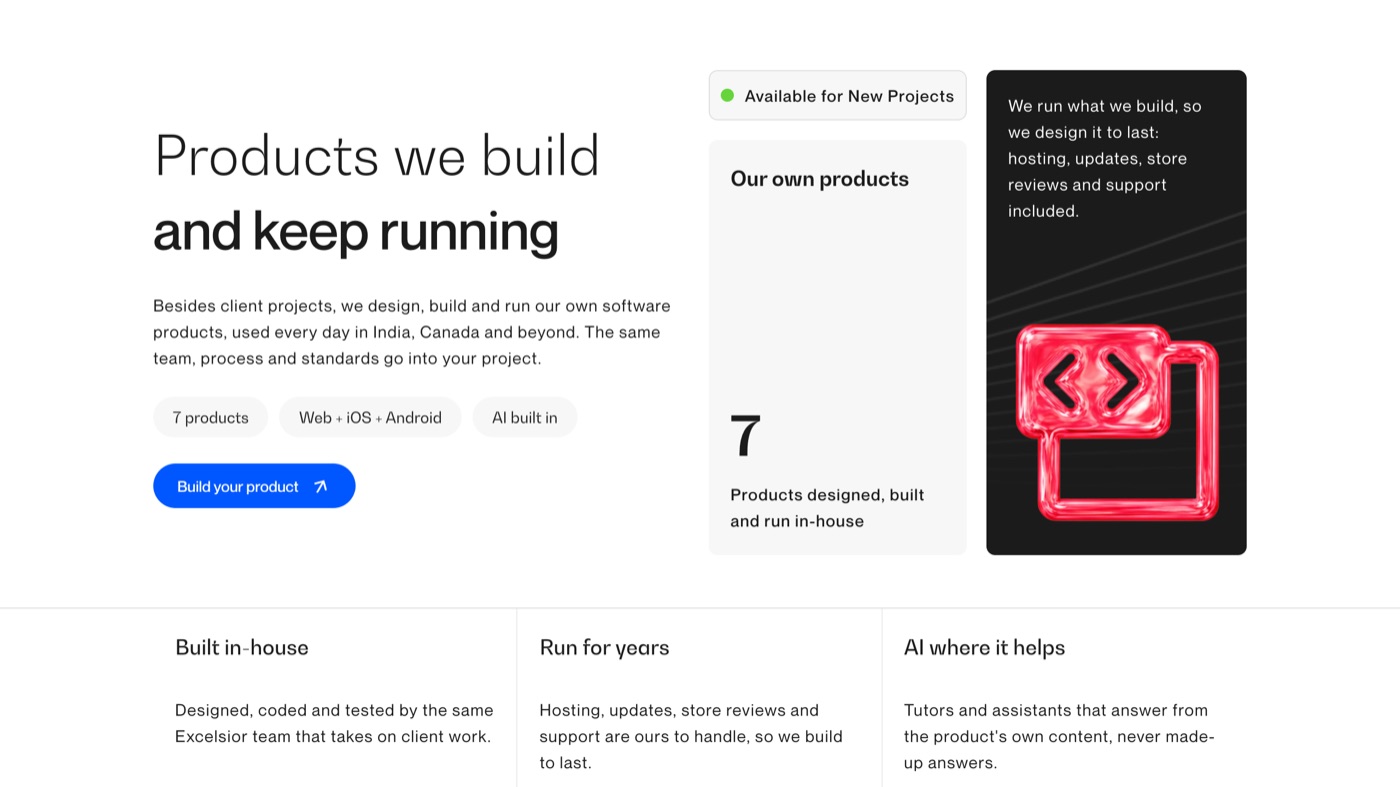
Products we designed, built and run
LicencePrep, Lawyerly and Growth Planet are our own products: each started from one clear journey before anything else was added. You get a written scope, weekly demos of working software, and launch support from the same team.
Want this for your business?
Ask ET on our website, or book a free 30-minute call with a project lead, not a salesperson.

