In 30 seconds
- Off-the-shelf CRMs are the right start for most sales teams: fast, proven, and someone else maintains them.
- Building your own pays when your process is your edge, when you pay for many licences you barely use, or when workarounds cost more than the software.
- Many businesses do both: a ready-made CRM for sales, and their own software for the part that is unique.
Every growing business reaches the CRM question. A ready-made CRM is the sensible default, and for most sales teams it is the right answer. But some businesses spend years bending one around how they actually work, and pay for it every month.
Buy for the parts of your business that are like everyone else’s. Build for the part that makes you different.
Choosing on your real process
Make the decision on how you actually sell, not on a feature list.
How it works
Choosing on your real process
The steps, in words
- Map how you really sell: From first enquiry to repeat order, as it happens today.
- Try the ready-made fit: Run your real process in a trial of two or three CRMs.
- Count the workarounds: Spreadsheets, copy-paste, extra tools, reports by hand.
- Compare the five-year cost (a person decides): Licences and workarounds, against a build and its upkeep.
- Choose, or combine: Ready-made, your own, or both, joined by an API.
When ready-made is the right answer
A standard sales process
Leads, deals, follow-ups and quotes, like most teams.
You need it this month
Set-up in days, not a project.
Nobody to maintain software
Updates, security and backups are the vendor’s job.
Your tools already connect
Email, calendar, accounting and phone integrations exist.
When your own pays
Your process is your edge
Pricing, approvals or service steps that no template matches.
Workarounds everywhere
Spreadsheets beside the CRM, copy-paste between tools, reports built by hand every week.
Many licences, little use
Paying per user for people who only need one screen.
Your data must stay with you
Rules, customers or contracts that require it in your own systems.
The cost over five years
The licence price is the visible part. Compare the whole picture, over the years you will actually use it.
In practice
A manufacturer that did both
Say a manufacturer sells through dealers, with its own price list per dealer and an approval for every quote.
- Contacts and deals stay in a ready-made CRM, which the sales team already likes.
- Dealer pricing, quotes and approvals move into a small system of their own, built around how they really price.
- An API joins the two, so a won deal becomes an approved quote, and its status shows back in the CRM.
- The spreadsheet that used to hold dealer prices is retired.
Questions to answer before you build
- Which part of our process is unique? Build only that.
- Who owns it after launch? A partner on a support plan, or your own team.
- What does the first version leave out? Start with one team and one workflow.
- How will it connect? To email, accounting and any CRM you keep.
- What will we stop paying for? Licences, tools and hours spent on workarounds.
We have built this
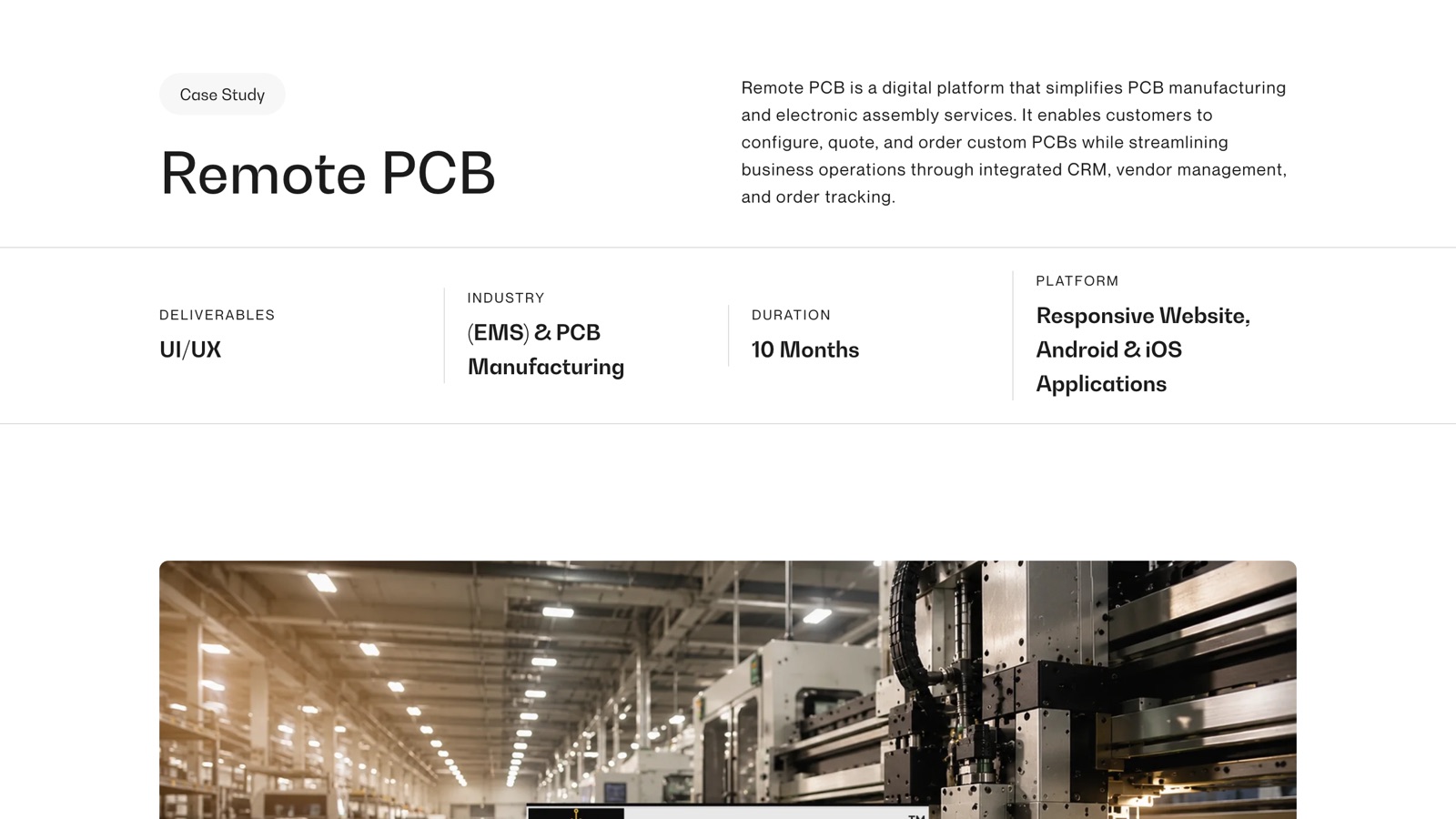
Remote PCB: orders, vendors, payments and shipping in one platform
For Remote PCB we designed, built and maintain an e-commerce platform for printed circuit boards: the website, Android and iOS apps and a business CRM. Customers upload their Gerber files and order; admins, vendors and customers each have their own panel; payments run through Razorpay or cash on delivery, and shipping through Shiprocket.
Frequently asked questions
How much does a custom CRM cost?
It depends on the workflows and integrations. Our free app cost estimate gives you a written range for your case.
Can we move our data from our current CRM?
Yes. Most CRMs export contacts, deals and history, and the import is part of the project.
Is a custom CRM harder to maintain?
It needs an owner: a partner on a support plan, or your own team. In return, changes follow your process, not the vendor’s roadmap.
Can we start small?
Yes, and you should: one team, one workflow, connected to the tools you keep.
Want this for your business?
Ask ET on our website, or book a free 30-minute call with a project lead, not a salesperson.