





We build mobile applications for clients using both React Native and Flutter. The choice of framework is a technical decision with long-term consequences for your project's budget, timeline and user experience. This article outlines the decision framework we use to help you analyse the trade-offs based on your specific requirements.
Key questions for your framework choice
What is your team's existing skillset?
If your team is proficient in JavaScript and React, React Native offers a familiar environment. If not, the learning curve for both frameworks must be considered, with Flutter's Dart language being a new dependency for most web developers.
How critical is UI consistency?
If your brand requires a pixel-perfect design that is identical on iOS and Android, Flutter's single-codebase rendering is a clear advantage. If you prefer your app to adopt the native look and feel of each OS, React Native is the more direct path.
How much native device functionality do you need?
Both frameworks can access native APIs like the camera or GPS. React Native's JavaScript bridge architecture can sometimes simplify integration with existing native code, while Flutter uses platform channels, which require writing platform-specific code in a different way.
React Native vs Flutter: a direct comparison
There is no single 'best' framework. The choice is an exercise in managing constraints and aligning technology with your business goals. We have delivered projects in both, including the Foodalios and Univia mobile apps.
1. Performance and rendering
React Native uses a JavaScript thread to communicate with native UI components via a 'bridge'. For most applications, performance is adequate. However, complex animations or data-heavy lists can cause frame drops as the bridge becomes a bottleneck. The trade-off is near-native component behaviour at the cost of potential performance issues under load.
Flutter avoids a bridge. It uses its own rendering engine, Skia, to draw the entire UI. This results in consistent 60fps animations and predictable performance across devices. The trade-off is a larger initial application size and a UI that is entirely managed by Flutter, separate from native OS components.
2. Development and team skills
React Native's primary language is JavaScript or TypeScript. This gives you access to a large talent pool and allows web development teams to transition to mobile with less friction. The trade-off is a dependency on the wider JavaScript ecosystem, which can sometimes lead to complex dependency chains.
Flutter uses Dart, a language developed by Google. While modern and type-safe, it is less common than JavaScript. Your team will likely need to learn it. The trade-off is a steeper initial learning curve in exchange for a highly integrated toolchain and language designed specifically for building user interfaces.
3. User interface and design
React Native renders standard native UI components. An app will look and feel like a native iOS or Android app by default. This can be an advantage if you want platform-specific conventions. The trade-off is that creating a consistent, branded look across both platforms requires extra effort and platform-specific styling.
Flutter provides a comprehensive library of widgets that are drawn by the framework itself. This gives you complete control over every pixel, ensuring your UI is identical on all platforms. The trade-off is that your app may not automatically adopt the look of a new OS version, requiring manual updates to stay current.
4. Ecosystem and libraries
React Native, being older and based on React, has a vast ecosystem of third-party libraries for almost any function. You can integrate packages from the entire JavaScript world. The trade-off is that the quality and maintenance of these libraries can vary significantly.
Flutter's ecosystem, managed through pub.dev, is newer and smaller but is curated by Google and the community. You will find well-supported packages for common functionality. The trade-off is that for niche use cases, you may not find a pre-built library and might need to build the functionality yourself.
Making your decision
The choice between React Native and Flutter is a choice between leveraging existing web skills for a native look and feel, or adopting a new toolset for ultimate UI control and consistent performance. Neither is universally superior.
We deliver custom mobile applications for clients using both frameworks. Our process involves analysing your project's specific goals, technical constraints and long-term maintenance plans to recommend the right technology. If you need a partner to help navigate this decision and build your application, contact us.
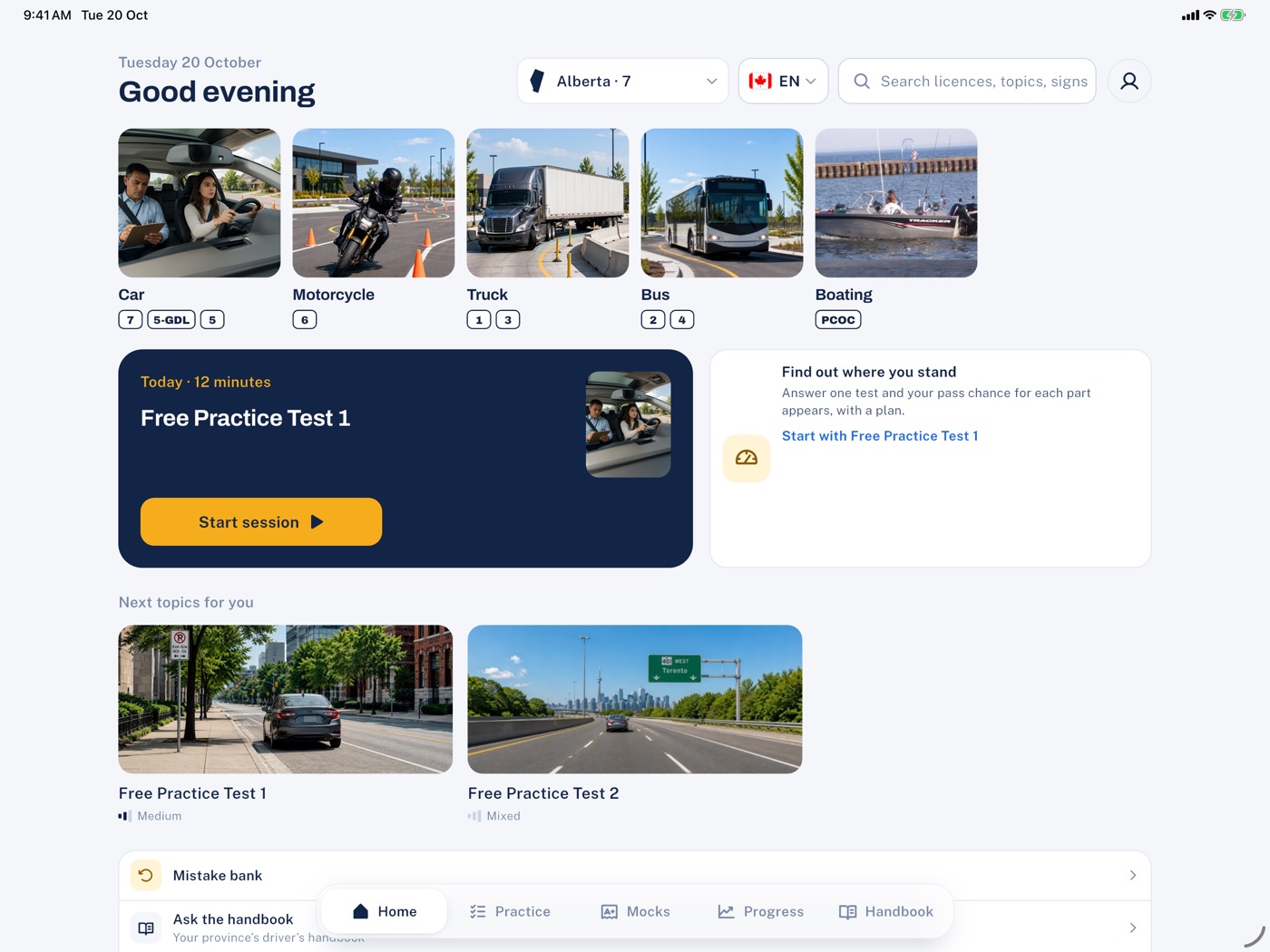
We have built this
LicencePrep and Growth Planet, our own Flutter apps
LicencePrep, our driving-test practice app for Ontario, Alberta and British Columbia, runs on iPhone, iPad and Android from one Flutter codebase. Growth Planet ships its iPhone and Android apps the same way.
Want this for your business?
Ask ET on our website, or book a free 30-minute call with a project lead, not a salesperson.

