




In 30 seconds
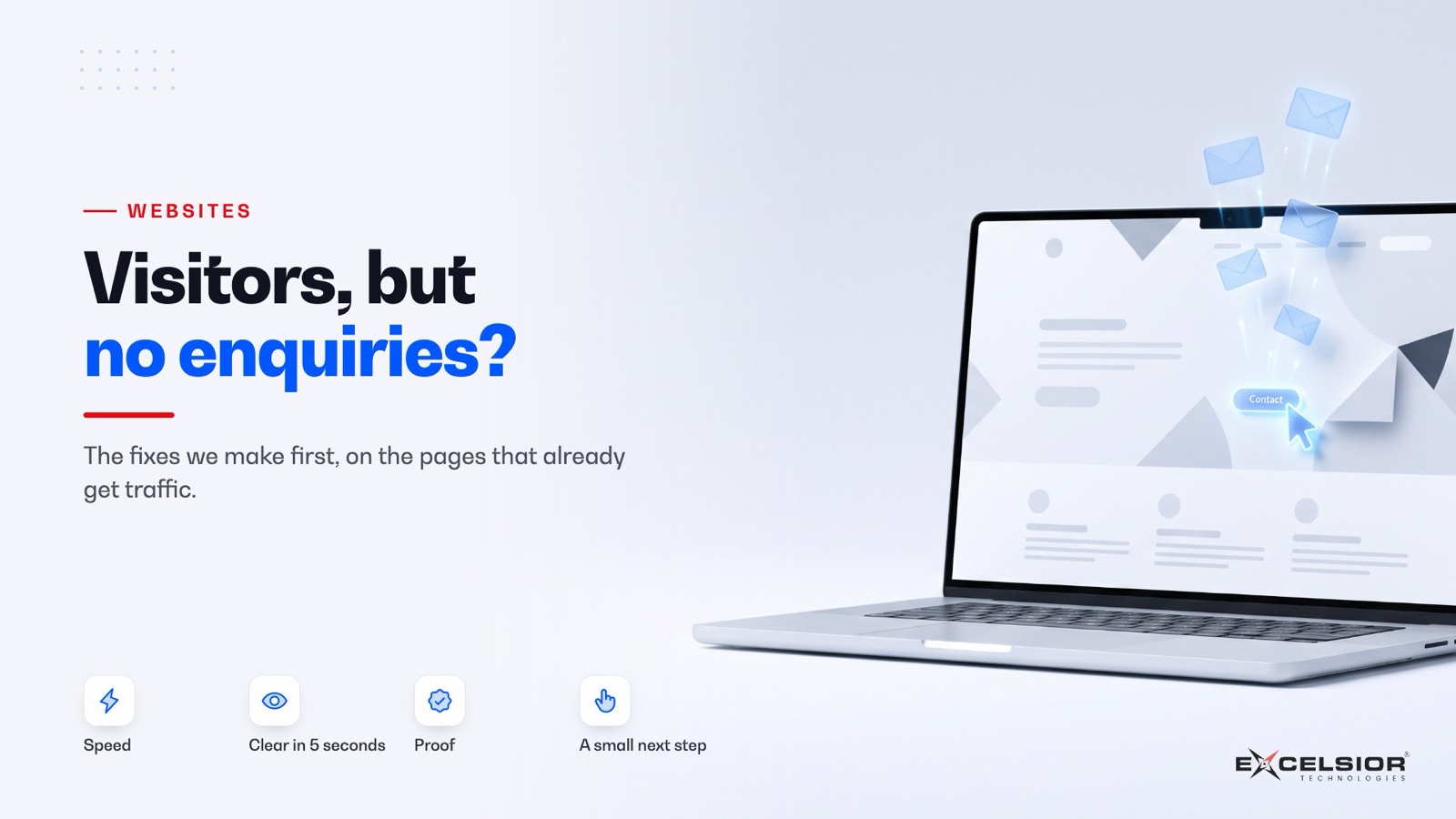
- Visitors leave when the page is slow, when they cannot tell in five seconds what you do for them, or when nothing proves you can.
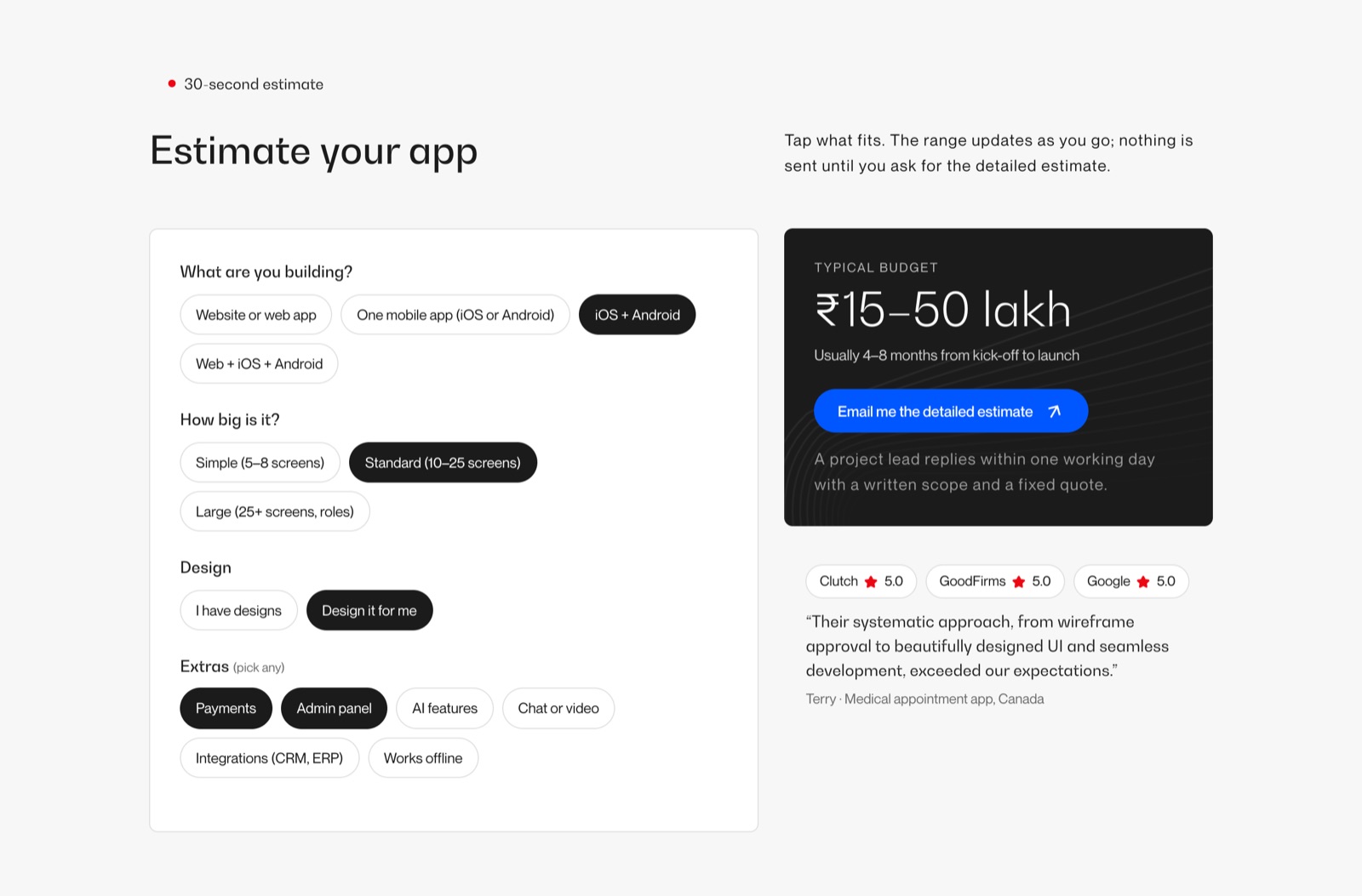
- The next step must feel small: a 30-minute call, an instant estimate, a question to an assistant. Not a twelve-field form.
- Fix the pages that already get traffic first; that is where the enquiries are hiding.
“We get traffic, but nobody calls” is one of the most common things we hear. The good news is that the cause is rarely mysterious. It is almost always one of four things.
Visitors decide in a few seconds whether they are in the right place.
The five-second test every page must pass
How it works
The five-second test every page must pass
The steps, in words
- It loads fast: Readable in under three seconds on a phone, on mobile data.
- It says what you do, for whom: In the first line, in the customer’s words, not a slogan.
- It proves it: A real project, a named client, a short video, a review.
- It offers a small next step: Book a call, get an estimate, ask a question.
- A person follows up fast (a person decides): The same day, from someone who can answer.
1. Speed
A page that takes several seconds to show its first words on a phone loses people before they read anything. Common culprits: huge images, video that plays on load, too many scripts and chat widgets.
What we do first: compress and resize images, load video only when someone presses play, remove scripts nobody uses.
2. Clarity
Visitors decide in a few seconds whether they are in the right place. A headline like “Empowering your digital future” tells them nothing.
What we do first: rewrite the top of each key page to say what you do, for whom, and the result, in the customer’s own words.
Says what you do
- “Billing software for pharmacies in Gujarat”
- “GST-ready, works offline, set up in a day”
- “Get a free demo”
Says nothing
- “Empowering your digital future”
- “Your trusted partner for excellence”
- “Contact us”
3. Proof
Claims are free. Proof is what persuades: a named client, a real screen, a short video testimonial, numbers you can stand behind.
What we do first: put one strong piece of proof next to every claim, and link each service to the case study that shows it.
4. A small next step
“Contact us” with a twelve-field form is a big ask. Smaller steps convert better:
| Step | Effort for the visitor | What you get |
|---|---|---|
| Book a 30-minute call | Pick a time | A qualified conversation |
| Instant estimate | Five taps | A lead who knows your price range |
| Ask an assistant | One question | A lead, even at midnight |
| A free check or review | A link and an email | A warm, specific enquiry |
Where to start
Look at the five pages that already get the most visitors. Run the five-second test on each one, on a phone. Fix those first: they already have the audience, so every improvement shows up as enquiries quickly.
We have built this
What we changed on our own website
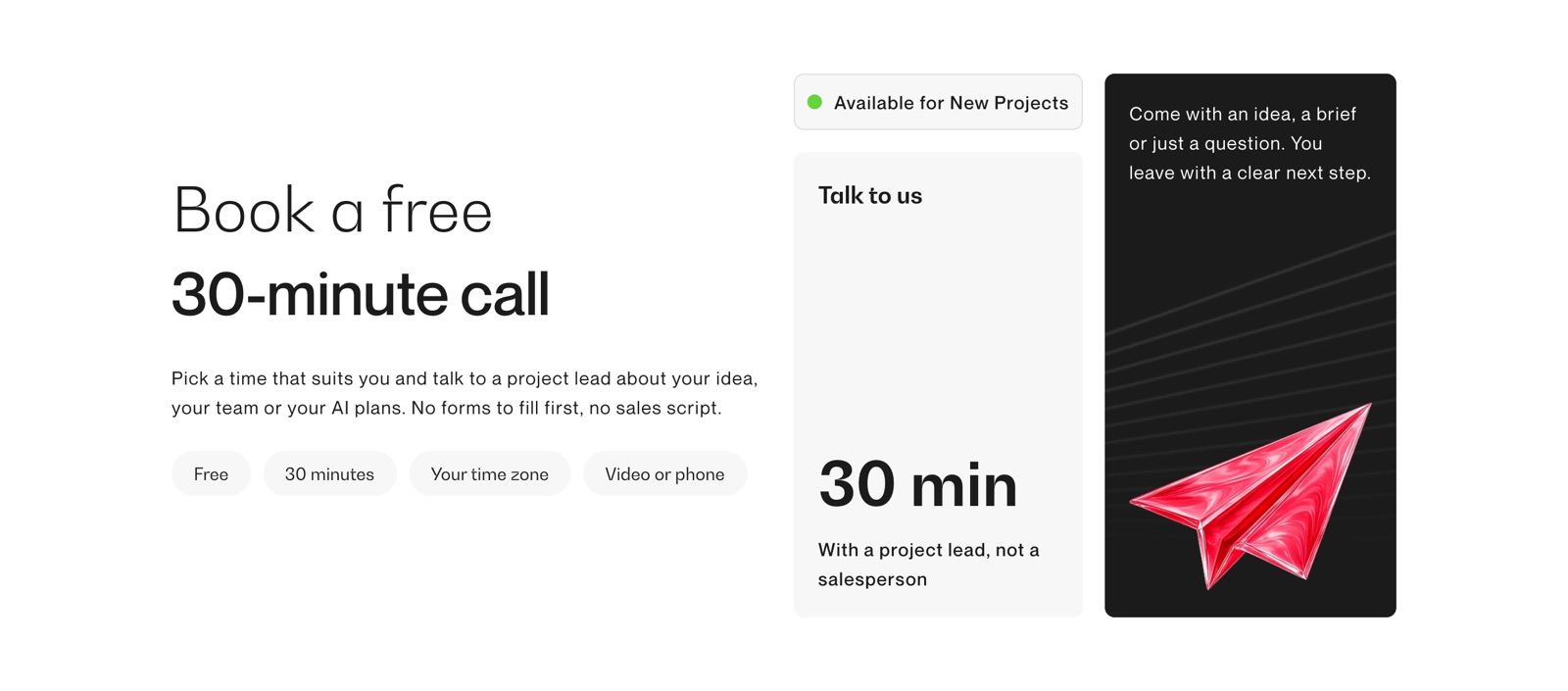
This autumn we rebuilt our site around small next steps: a free 30-minute call booked in the visitor’s own time zone, a 30-second cost estimator, and ET, who answers questions and opens the right form already filled in.
Every service and case study page now says plainly what we do and shows real work, from LicencePrep to the Bar Council of Gujarat.
Frequently asked questions
Do we need a new website?
Usually not. Most gains come from speed fixes, clearer copy, proof and better next steps on the pages you already have.
How quickly will enquiries improve?
Speed and copy fixes on high-traffic pages can show within weeks. Search improvements take longer.
Should we add a chatbot?
Only if it answers from your own content and hands over leads properly. A generic bot can make things worse.
What do we need to send for the free check?
Just your website link and who your ideal customer is. We reply with the three changes we would make first.
Want this for your business?
Ask ET on our website, or book a free 30-minute call with a project lead, not a salesperson.

